First flight was from Melbourne to Adelaide, for a 4 sector day. After the Adelaide we do a few Port Lincoln shuttles. Port Lincoln is a small town 200km due west of Adelaide, famous for its tuna fishing and great white sharks.
I have done a lot of flying out of Melbourne and it was no real surprise there, so I was reasonably comfortable with my surroundings. However, a new plane, a training environment, a long and then short, fast sector to Port Lincoln.. anyway, what an introduction to the plane than with a 360nm leg between two major Australian cities and a smaller outport, both of which i haven't flown into.
Training captain decided first leg and last leg should be mine, afterall what better way to learn than be thrown into the deep end. Short taxi out to the runway 27 threshold of Melbourne.
"Line-up drills"...
I turn on the radar, get the external lights on, turn on the pitot heats, get the control locks off and see full free movement of the spoilers, ailerons and elevator and set the bleed air to min flow, and but leave the bleed air on.
"Cleared for take-off, heading 263"
V1.. Rotate..
We pitch up to approximately 9 degrees nose up.. All i have to say is 'wow' at this point. The plane rapidly increases speed to about 185 knots, climbing at around 3000FPM. (To put this into comparison, the 200/300 used to climb out at 170kts at about 1000FPM)
Passing 1400ft, i call for the flaps to zero, bleeds on and set climb power. We accelerate to 210 knots and contact departures.
We are cleared straight away to our cruising level of flight level 240, and get tracking direct to Bordertown, our first waypoint of our flightplan.
At this stage, being not overly heavy at 26.5 tonnes, we are able to accelerate to 240kts climb, and still achieve 2000FPM climb. Through transition altitude we turn off the exterior lights, turn off the tank aux pumps, and set climb power of 850RPM.
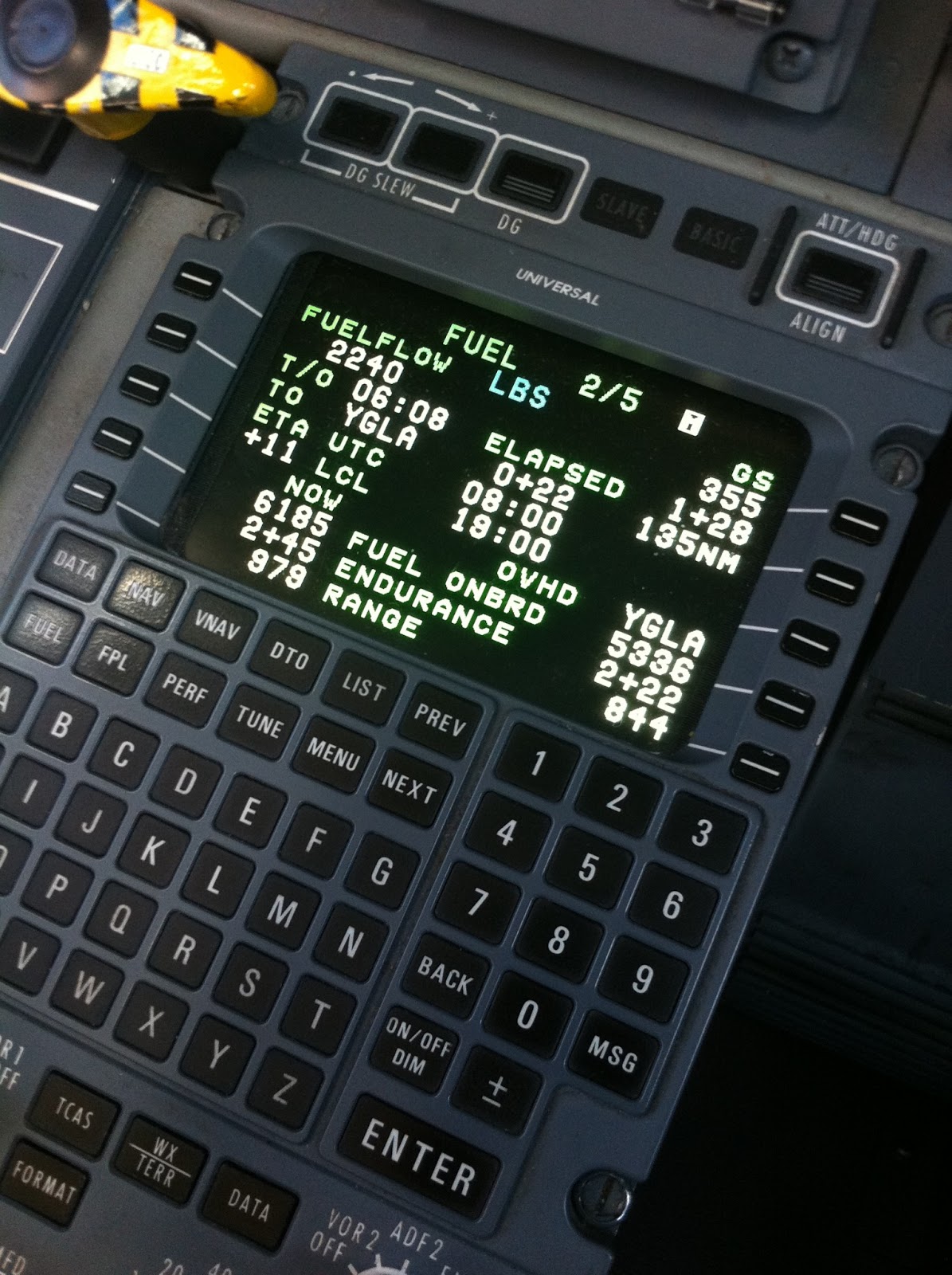
We make a cabin announcement to passengers which is an indication to the cabin crew that we are no longer sterile flight deck, and is also an indication that we are hungry and to please bring up our lunches! :) Leveling off at FL240 we set cruise power. We are pushing into a 60kt headwind, and have a TAS of 360Kts, but achieve only a groundspeed of 300. Still, 300 groundspeed is one of the best i ever saw in the Dash-8-200/300.
So far so good with the training! It's been fun so far, the training captain is very relaxed and we are having discussions about certain aspects of the plane while we eat our meals. He tells me the easiest way to prepare for descent in the Q400 is to remember: Bugs, Brief, VNAV, format. (I personally like to brief the STAR and approach first then set the up the bugs, but each to their own)
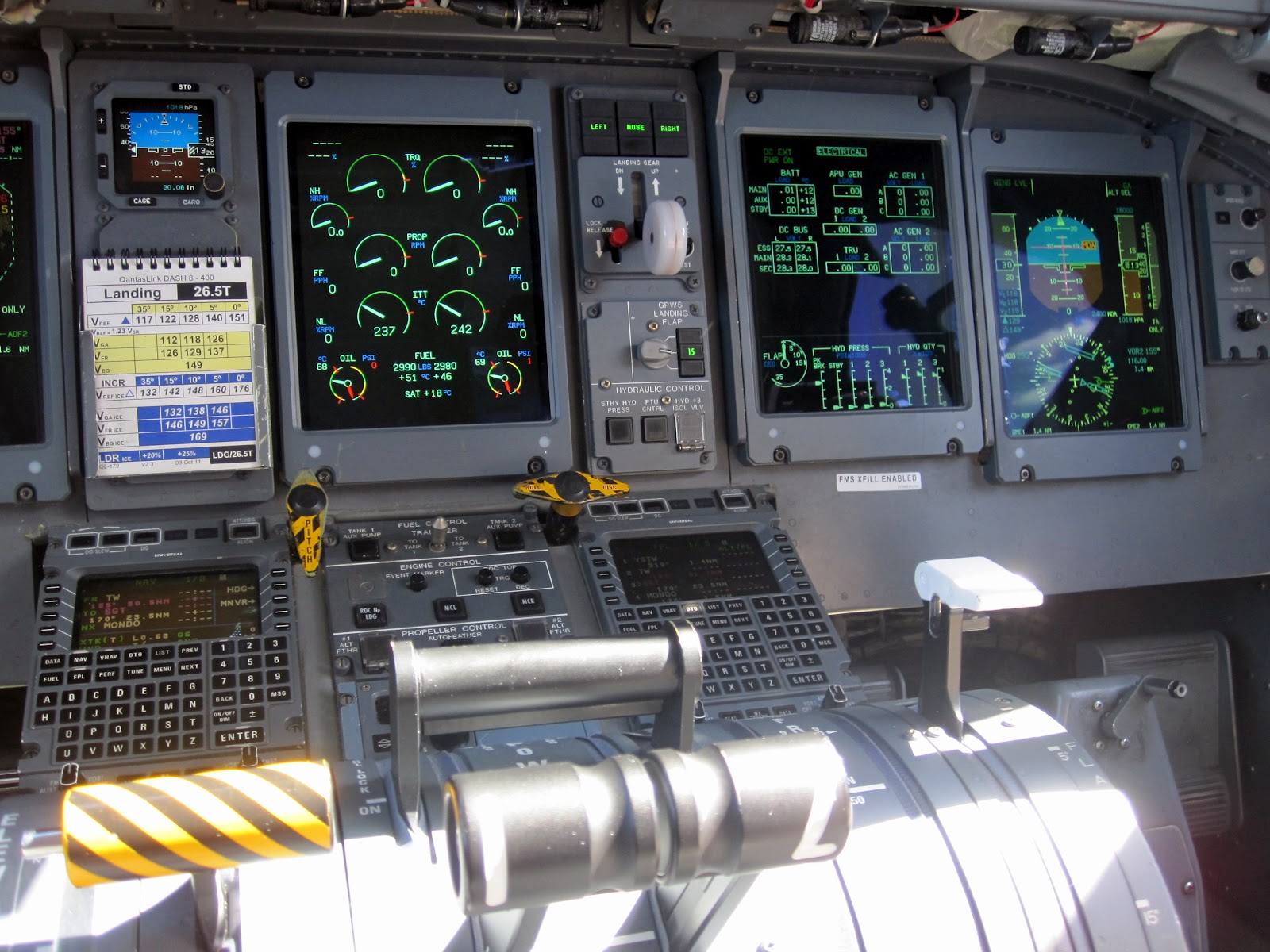
Anyway, this makes sense and works quite well.. We bug for a flap 15 landing, on the speed tape and set the GPWS flap selector to 15. (If this was say set to flap 35 then we would get a GPWS warning of "too low - flaps" which would necessitate a go around) Since it is going to be a visual approach via the 23 ILS into Adelaide, we set the MDA bug to 1000ft as that is the acceleration altitude if we had to do a go around.
We then brief the STAR and ILS arrival into Adelaide (we do the ILS for practice in this case for my benefit) and we prepare a VNAV into the FMS for the our decent planning. I set the format (this is a key that allows us to switch our MFD (multi function display) to "blue needles," or in other words, raw data VOR format and we can set up the runway direction of 222 degrees for the ILS approach.
All ready for our decent! We receive clearance to FL140 and begine descent. Passing through FL200 we ask the cabin crew to prepare the cabin for landing.
Further descent clearance is to 7000 feet. Passing through FL110 is our transition drill where we turn on the lights, put on the tank aux pumps and set the QNH for the landing airport. At this stage we are racing a 737 inbound and due to the fact we don't accept track shortening (as we are doing the ILS for practice) we are given a few short vectors to the north.
"Track direct track to Modbury, descent 3000 cleared ILS 23 approach"
Modbury is the NDB about 12nm north of the 23 ILS and is also the initial approach fix. We pass over it at 210Kts, which is the company speed for the initial approach fix. Power levers to flight idle, we prepare to configure the aeroplane. At around 7nm from the airport we configure flap 5, and shortly after gear down. Continue to decelerate past 172 knots and call for "flap 15, landing checklist"
Well.. a bit of wind, and few bumps, but otherwise a nice day.. First landing in the new plane was a greaser! Good start with good landing mojo! Awesome.. I must say though, the power levers and my hands were reasonably sweaty and i apologised to the skipper when he took over control passing 50 kts on the landing rollout..
All in all a great flight, and i'm loving the new plane. Thanks for reading